
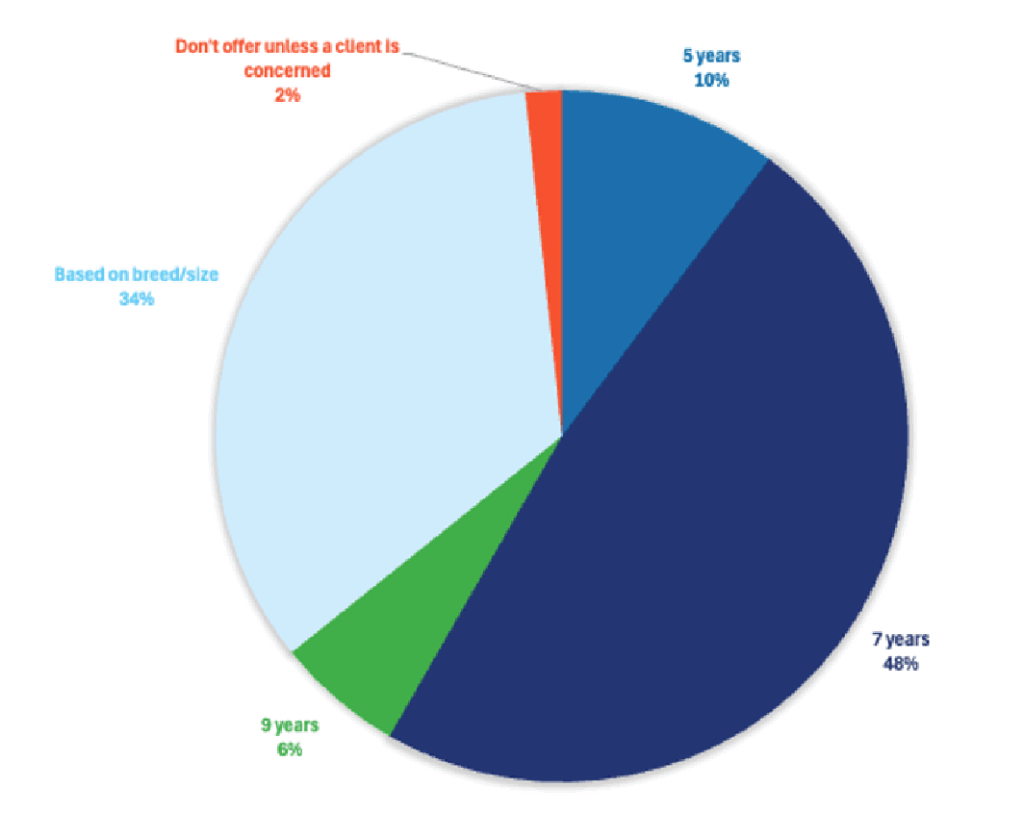
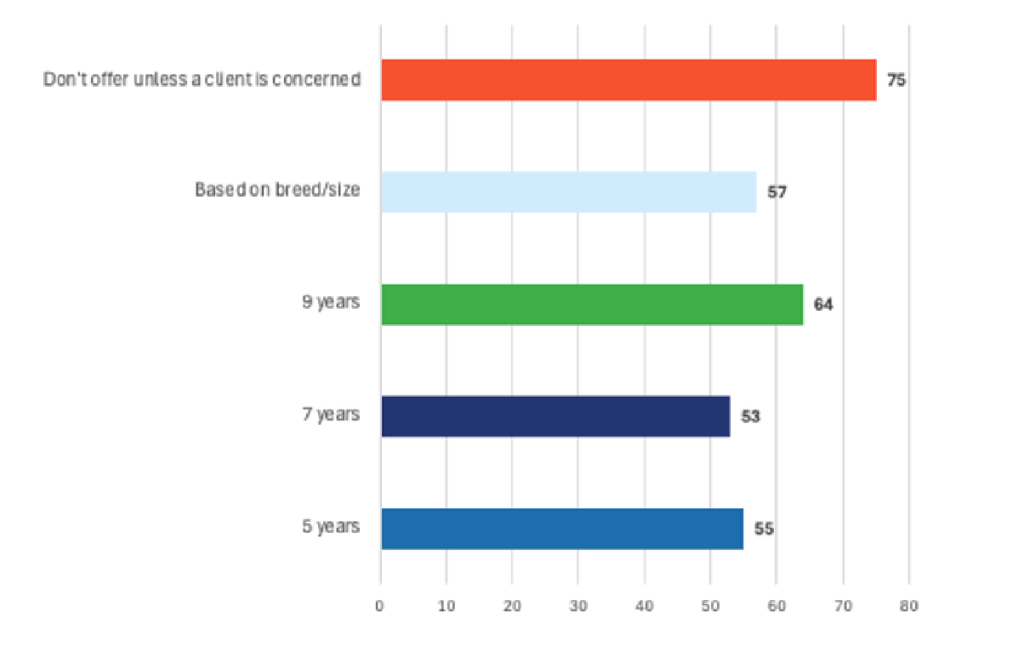
Surveyed DVMs overwhelmingly selected 7 years of age as the ideal time to start lab work for aging dogs and reported 53% efficacy in improving patient outcomes when doing so.
Lab Work in Older Dogs
Treatment Selections
Effectiveness
Specialists Insight
The right age to start routine senior screening depends primarily on breed size, because larger breeds age faster than smaller ones. A good rule of thumb is:
- Giant breeds (Great Danes, Mastiffs, Irish Wolfhounds): Start senior lab work around 5 years of age.
- Large breeds (Labradors, Golden Retrievers, German Shepherds): Start around 6–7 years of age.
- Medium breeds (Border Collies, Bulldogs, Corgis): Start around 7 years of age.
- Small and toy breeds (Terriers, Poodles, Chihuahuas): Start around 8–9 years of age.
These guidelines reflect differences in metabolic aging, cancer risk, cardiovascular changes, and overall lifespan across breed categories.
What lab work should be included?
The most effective senior screening typically includes:
- CBC (complete blood count) – checks for anemia, infection, and certain cancers
- Chemistry panel – evaluates kidney, liver, pancreas, electrolyte status
- Urinalysis – important for early kidney disease detection
- Thyroid function (T4 or full thyroid panel as indicated) – especially in middle-aged to older dogs
- Blood pressure measurement – often overlooked but highly valuable
- Optional based on breed risk:
- BNP or cardiac screening (e.g., Dobermans, Boxers)
- Screening for protein-losing diseases
- Early cancer screening tests, if available and appropriate
Most effective practices for the best outcome:
- Start screening before clinical signs appear.
- Early detection allows us to intervene when diseases like kidney disease, hypothyroidism, diabetes, and certain cancers are most manageable.
- Perform labwork yearly at minimum, and every 6 months for seniors or high-risk breeds.
- Dogs age roughly 4–7 “human years” for every calendar year—bi-annual checks help catch changes early.
- Combine labwork with a thorough physical exam.
- Exams detect heart murmurs, dental disease, arthritis, and subtle neurologic or mobility concerns.
- Use breed-specific wellness planning.
- For example: Cavaliers → early cardiac screening Dobermans → dilated cardiomyopathy screening Golden Retrievers → cancer vigilance Dachshunds → spinal health monitoring
- Track trends, not just numbers.
- Comparing results over time is one of the most powerful tools in veterinary medicine.
- Focus on preventive care.
- Weight management, dental care, joint health supplements, and parasite prevention all significantly extend quality of life.
Start senior lab work when your dog enters the “aging” stage for their breed size, and repeat it regularly. Early detection and proactive management are the most effective ways to improve long-term outcomes, extend lifespan, and enhance quality of life.