
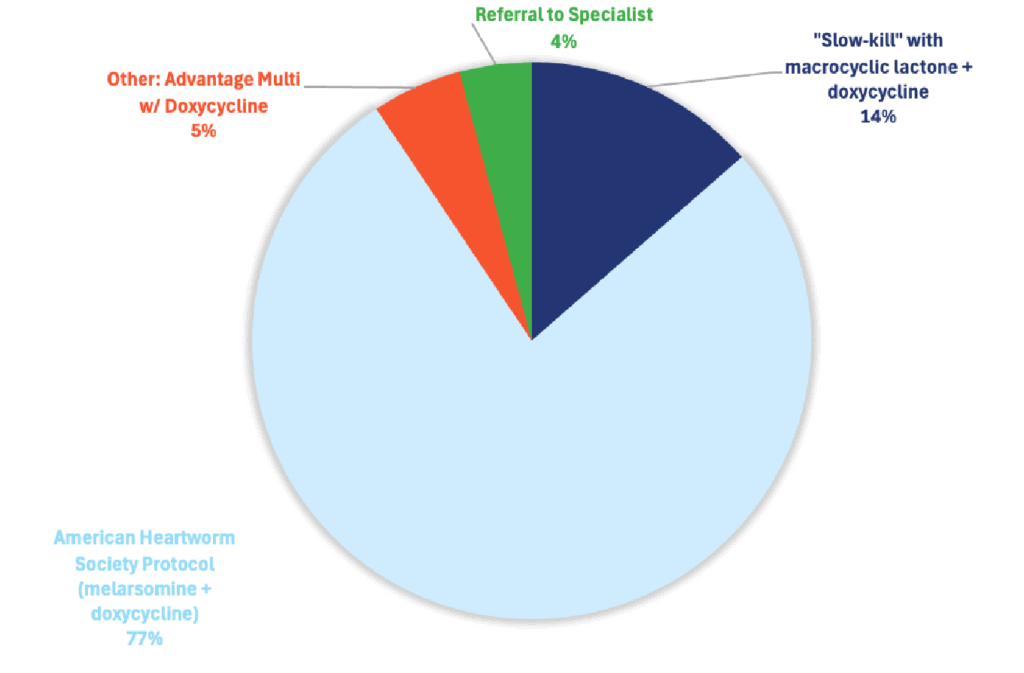
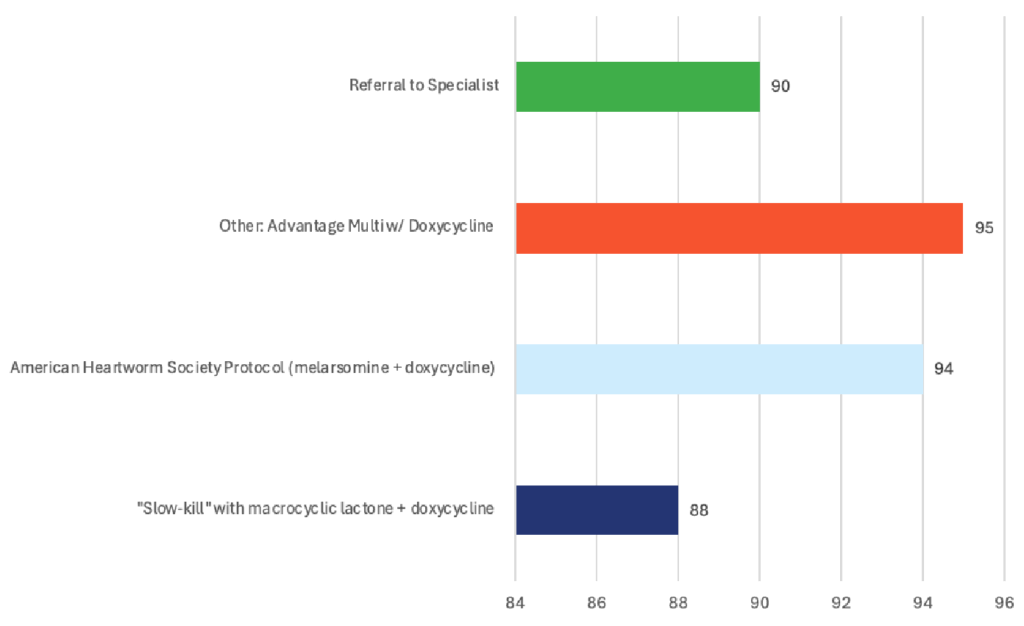
This week’s results show strong alignment in treatment approaches. Among the DVMs who responded, 74% reported using the American Heartworm Society protocol when treating their patients. Those who followed this protocol reported an impressive 94% efficacy rate, highlighting both the consistency of adoption and the high success rate in practice.

Heartworm Disease
Treatment Selections
Effectiveness
Specialists Insight
To provide the most accurate perspective, we asked a specialist to share their recommendations, guided by the most current American Heartworm Society (AHS) guidelines.
Preferred First-Line Protocol:
- AHS protocol: melarsomine + doxycycline + macrocyclic lactone, with strict exercise restriction (± prednisone as indicated).
- Why: The 3-dose melarsomine regimen is the fastest and most effective way to clear adult worms and halt disease progression. AHS recommends it for all heartworm-positive dogs when feasible.
- Effectiveness: ~98% adulticide efficacy with the 3-dose series (vs ~90% with the 2dose series).
Specialist Perspective on Treatment Options
AHS protocol (melarsomine + doxycycline): Top choice, highest efficacy (~98%), quickest sterilization of infection, and strongest supporting evidence. Works best with exercise restriction, macrocyclic lactone, and anti-inflammatory management.
Surgical extraction: Reserved for caval syndrome (acute, life-threatening obstruction). Can be lifesaving, but is not curative for pulmonary arterial worms; melarsomine treatment is still required afterward.
Referral to specialist: Indicated when dogs have caval syndrome, advanced cardiopulmonary disease, significant comorbidities, or when client/protocol constraints exist. Treatment still centers on the AHS melarsomine-based protocol when possible.
“Slow-kill” (macrocyclic lactone + doxycycline): Not recommended as first-line when melarsomine is available. This approach prolongs worm death over months–years, allowing ongoing cardiopulmonary damage and raising resistance concerns. Considered only under “spectrum of care” guidance when optimal therapy isn’t feasible.
Microfilaricidal-only approach: Inadequate as definitive therapy. While it reduces transmission, it does not eliminate adult worms, allowing disease progression.
Specialist Summary
A specialist following the AHS protocol would respond: The recommended 3-dose melarsomine series achieves approximately 98% adulticide efficacy. Clinical adequacy also depends on staging, use of doxycycline and macrocyclic lactone, strict activity restriction, and re-testing as outlined in AHS guidelines.
In short, while there are multiple approaches to managing canine heartworm disease, the AHS melarsomine-based protocol remains the gold standard—delivering the highest efficacy, the fastest resolution, and the best long-term outcomes when paired with comprehensive patient management.