
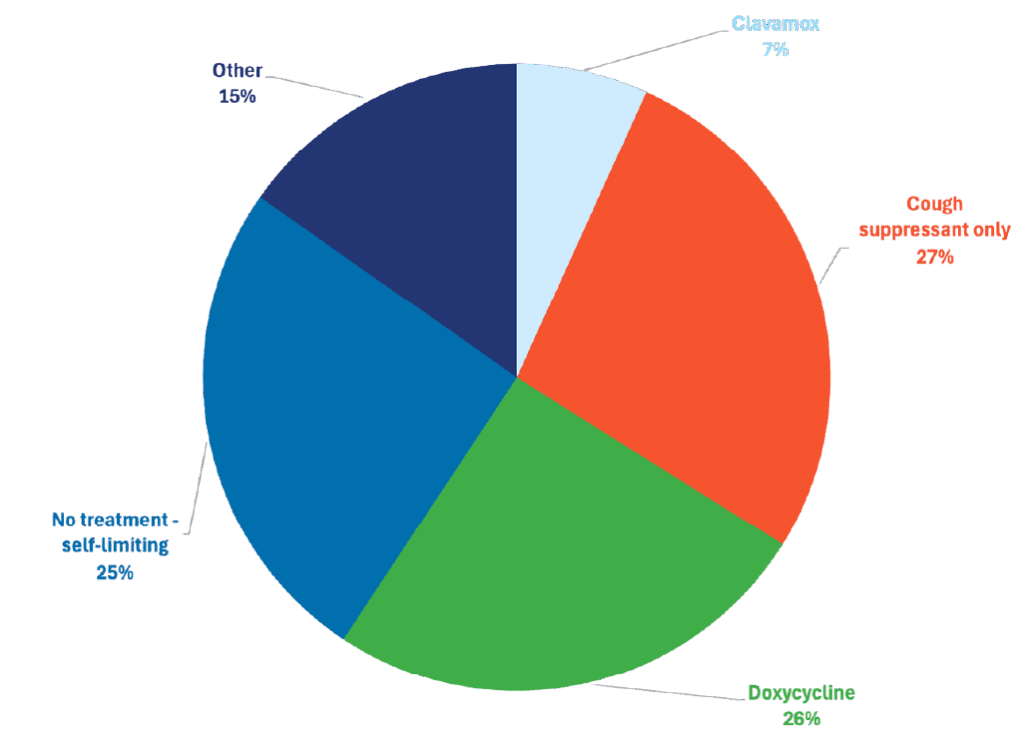
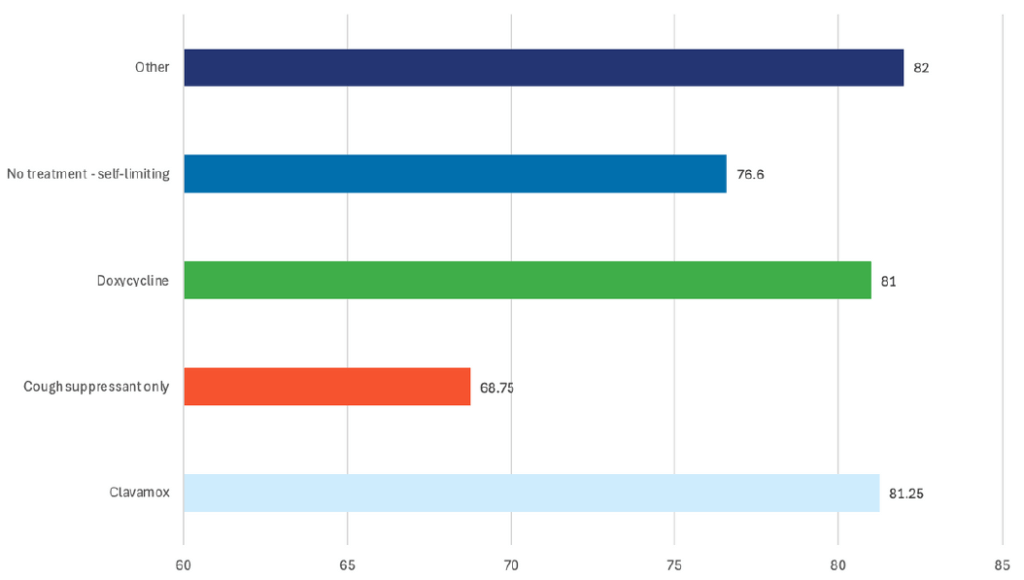
When asked about their management of kennel cough, most DVMs reported using a cough suppressant as their primary treatment approach. Doxycycline was the next most common intervention and was rated as having an average effectiveness of 81% when used for cases where a bacterial component was suspected. Several respondents noted that combining doxycycline with Temaril-P appeared to yield especially effective results in managing both infection and cough-related discomfort. A smaller proportion of veterinarians indicated that they provide no treatment at all for mild, self-limiting cases, relying instead on supportive care. While some respondents reported success with a range of other options—such as nebulization, alternative antibiotics, or antiinflammatory therapy—these treatments were used less frequently and typically reserved for more severe or refractory cases.

Kennel Cough
Treatment Selections
Effectiveness
Specialist Preferred Treatment for Suspected Bacterial Kennel Cough
Doxycycline remains the first-line antibiotic when a bacterial component is suspected.
- Dose: 5 mg/kg PO every 12 hours or 10 mg/kg PO once daily
- Duration: 7–10 days
Why Doxycycline?
The ISCAID guidelines recommend doxycycline for dogs with:
- Mucopurulent nasal discharge
- Fever
- Lethargy
- Inappetence
- Without evidence of pneumonia
This recommendation is based on doxycycline’s proven activity against Bordetella bronchiseptica and other common respiratory pathogens.
Important Note: The UW–Madison Shelter Medicine program advises that many cases of kennel cough are viral and resolve on their own. Overusing antibiotics—especially prophylactically—can contribute to antimicrobial resistance.
Effectiveness & Clinical Considerations
- Effective: Doxycycline is widely regarded as effective when bacterial infection or secondary bacterial involvement is suspected.
- Self-limiting cases: Most uncomplicated kennel cough cases are viral and improve with supportive care alone (rest, hydration, cough suppressants if appropriate).
- Escalate if needed: Consider antibiotics if clinical signs worsen, persist beyond expected duration, or if there is risk of progression to pneumonia.
Clinical Takeaways
- First-Line Option: Empiric doxycycline remains the drug of choice when bacterial involvement is suspected.
- Judicious Use: Reserve antibiotic treatment for patients with moderate-to-severe signs or those at risk for secondary infection.
- Supportive Care: Mild, viral cases often respond well to symptomatic management without antibiotics.