
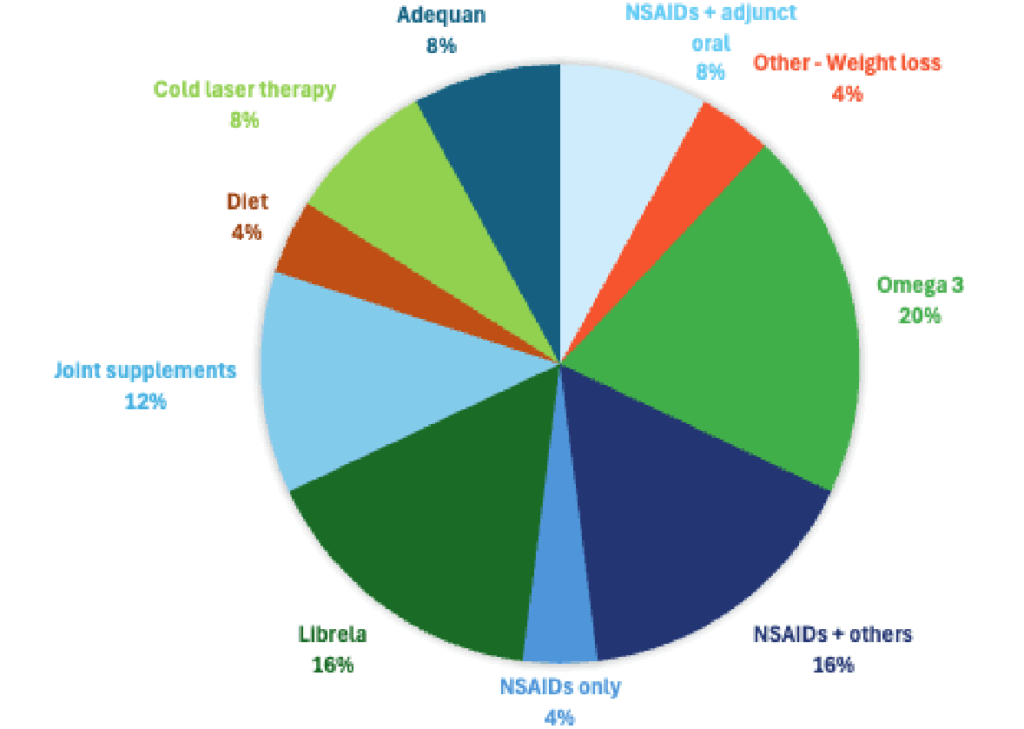
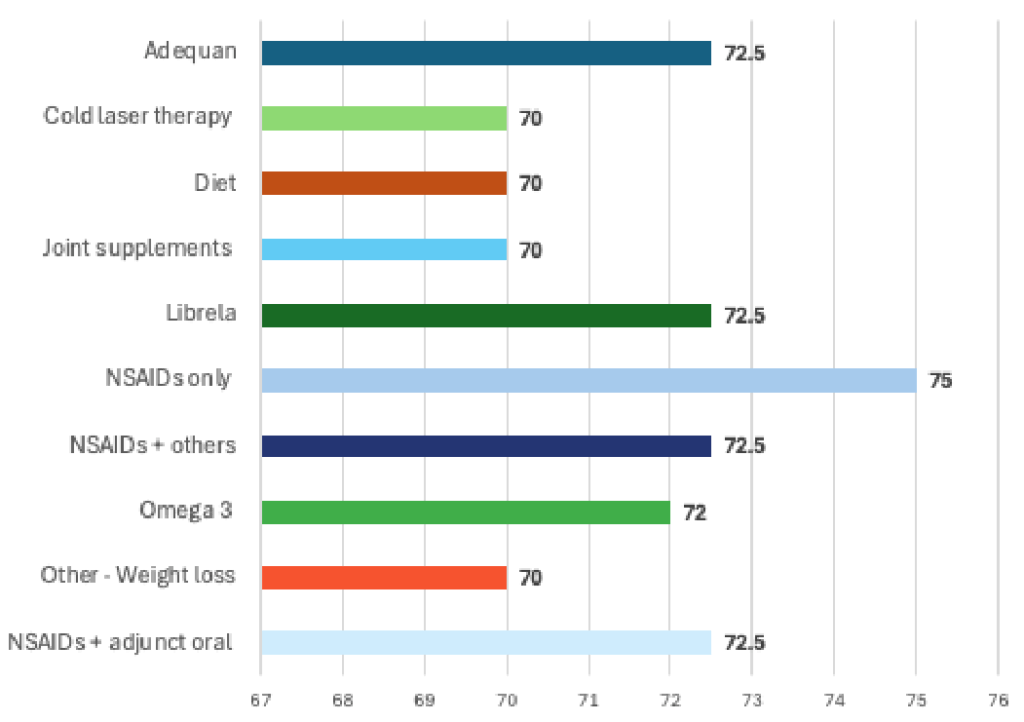
Among responding DVMs, 20% selected omega-3s as their first-line osteoarthritis therapy, though they reported seeing clinical effectiveness in patients about 72% of the time.

Osteoarthritis in Canines
Treatment Selections
Effectiveness
Specialists Insight
Veterinary specialists emphasize that managing osteoarthritis (OA) requires more than a single treatment. They recommend a multimodal approach—starting with proven core therapies and layering in emerging options and supportive strategies as needed. The goal is not only to control pain but also to preserve mobility and quality of life, tailoring care to each patient’s needs while weighing both benefits and risks.
1. Core Treatments
- NSAIDs remain the foundation of OA pain management, providing reliable relief.
- Combining NSAIDs with adjuncts (e.g., gabapentin, physical rehab) enhances outcomes.
- Multimodal therapy—layering treatments— delivers the best improvements in pain control and mobility.
2. Emerging & Novel Therapies
- Librela (anti-NGF mAb): Highly effective with convenient monthly dosing; rare but serious neurological risks require careful consideration.
- Adequan (PSGAG): May support cartilage health and reduce inflammation, though robust dog-specific evidence is limited.
- Regenerative therapies (stem cells, PRP): Promising and being researched. Some vets feel great confidence in this therapy.
3. Supportive Therapies
- Omega-3s, nutraceuticals, and prescription diets can reduce inflammation and support joint health, but should supplement—not replace—core therapies.
- Cold laser therapy: Evidence is mixed; However, some clinicians have great adjunctive success with this therapy.
- Lifestyle strategies (weight control, physical therapy, environmental modifications) are essential for holistic OA management.