
Meet the 2026 Clinical Outcomes Showcase Category Winners
What does innovation in veterinary medicine look like?
Sometimes, it looks like sophisticated predictive technology capable of identifying disease risk before clinical signs appear. Sometimes, it looks like rethinking the way an entire category of patients receives preventive care. And sometimes, it starts with something surprisingly simple: a better box or a better way to get a sample back to the hospital.
That range was on full display at CareVet’s 2026 Clinical Outcomes Showcase, where veterinary professionals, students and organizations came together around one shared goal: finding better ways to improve outcomes for pets.
This year’s category winners tackled very different challenges. But they have something important in common. They noticed an opportunity to make care better — and did something about it. To ensure every idea was evaluated on its merits, submissions underwent a double-blind judging process, with identifying information removed so judges could focus solely on the strength, impact and potential of the work.
Here’s a closer look at the four category-winning ideas.
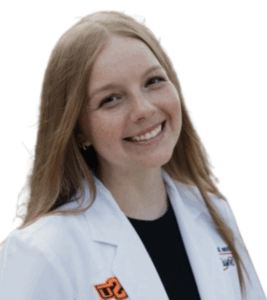
Rising Star Award: Kristen Slagle
Oklahoma State University
For hospitalized cats, hiding can be a good thing. It can help reduce stress and give a patient the sense of security they naturally seek.
But for veterinary teams, there’s a catch: traditional hiding spaces can make it harder to continuously observe a patient.
Kristen Slagle saw an opportunity to solve both problems. Her idea is a clear feline hideaway box lined with perforated privacy film. From the cat’s perspective, the box provides the security of an enclosed, darkened space. From the care team’s perspective, the patient remains visible for monitoring.
Simple? Yes. Potentially meaningful for feline patients and the people caring for them? Also yes. The design brings together Fear Free principles, patient comfort and the clinical realities of hospitalization without forcing teams to choose between them. And that’s exactly the kind of thinking the Rising Star Award was created to recognize: looking at something familiar and asking how it could work better.
The clinical outcomes connection: Less patient stress, continued clinical visibility and a better hospitalization experience for cats and veterinary teams.

Veterinary Technician Award: Sarah Wilmes
Binder Animal Hospital
Every veterinary team knows the scenario. The doctor recommends a urine or fecal test. The client agrees. There’s just one tiny logistical problem:
No sample.
Sarah Wilmes and the team at Binder Animal Hospital turned that everyday roadblock into an opportunity to improve diagnostic follow-through. Their solution was a prepaid sample-collection kit that gives clients the supplies and instructions they need to collect urine, stool or both at home and return the sample to the hospital after the appointment. There’s no complicated technology. No massive workflow overhaul. Just a thoughtfully designed process that makes the next step easier for the client.
And it works.
In 2025 alone, more than 1,000 prepaid samples were returned to the hospital for analysis. That means more recommended tests completed, more opportunities to detect disease earlier and more consistent monitoring for patients living with chronic conditions. It’s also a reminder of something veterinary teams understand better than almost anyone: a great clinical recommendation only helps the patient if it actually gets completed.
The clinical outcomes connection: Stronger diagnostic follow-through, earlier disease detection and more consistent chronic-condition monitoring.
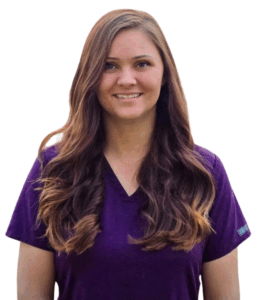
Veterinarian Award: Dr. Samantha Gruenwald
Frankenmuth-Birch Run Veterinary Hospital
Preventive medicine is a familiar part of care for dogs and cats. For exotic pets? The picture can look very different. Many small mammals, reptiles, birds and aquatic species don’t arrive at the veterinary hospital until something is already wrong. And because these species can be particularly good at masking illness, opportunities for earlier intervention can easily be missed.
Dr. SamanthaGruenwald is working to change that. Her approach brings preventive wellness into every exotic-animal interaction, even when the original appointment was scheduled for illness, grooming or another concern.
The framework considers species-specific husbandry, nutrition, preventive risks and age-appropriate screening needs. Clients receive tailored education and recommendations for future wellness care as part of that process. That proactive approach is already producing results.
Through routine weight tracking, body-condition assessment, nutritional counseling and earlier screening, Dr. Gruenwald has been able to identify disease sooner, increase acceptance of recommended diagnostics and help prevent recurring husbandry-related conditions.
The impact has even extended beyond the hospital. Following her educational outreach, a local pet store transitioned its budgies and parakeets to pelleted diets — helping future pet owners start with healthier nutrition from day one. It’s preventive medicine with a much wider lens.
The clinical outcomes connection: Earlier disease identification, prevention of avoidable illness, stronger client education and a higher standard of preventive care for exotic patients.

Veterinary Corporation & Group Award: Pointer Health
Veterinary medicine has traditionally been very good at answering one question:
What disease does this patient have?
Pointer Health is asking another:
What disease could this individual patient be at risk of developing next?
Its prognostic medicine platform uses predictive and causal modeling to analyze information already contained within a patient’s longitudinal medical record. Rather than looking only at how that patient compares with a broad population, Pointer looks for meaningful changes within the individual animal’s own history and baseline.
The platform can generate personalized risk assessments across more than 170 conditions without requiring additional testing, equipment or major workflow changes. Those insights are also translated into accessible education for pet owners, helping families understand why a particular risk may be elevated and what screening, monitoring, lifestyle or preventive steps may be worth discussing with their veterinarian.
The ultimate goal is a big one: help shift veterinary medicine further upstream, from recognizing disease once it becomes clinically apparent toward recognizing risk while there is still an opportunity to intervene earlier. Early results show the potential. In a 2025 practice pilot, hospitals using the platform saw increased participation in bloodwork, wellness testing, urinalysis and dental prophylaxis.
The clinical outcomes connection: Earlier recognition of disease risk, stronger preventive-care participation and more individualized clinical decision-making at scale.
Four Winners. Four Very Different Ideas. One Shared Mindset.
A feline hideaway.
A take-home sample kit.
A new preventive-care framework for exotic pets.
A predictive platform capable of evaluating risk across more than 170 diseases.
You probably wouldn’t put those four ideas in the same bucket at first glance. That’s the point. Advancing clinical outcomes doesn’t belong to one discipline, job title or type of innovation. It happens when someone recognizes a gap between the care we deliver today and the care we could deliver tomorrow — then starts closing it.
A student can do that.
A veterinary technician can do that.
A veterinarian can do that.
An organization can do that at scale.
The 2026 Clinical Outcomes Showcase winners remind us that changing veterinary medicine doesn’t always begin with a breakthrough that makes headlines.
Sometimes, it begins during a normal day in practice with one deceptively powerful question:
Could there be a better way?
Congratulations to Kristen Slagle, Sarah Wilmes, Dr. Samantha Gruenwald and Pointer Health — and to every Clinical Outcomes Showcase finalist who was willing to ask that question and share what they discovered.