
How a General Practitioner Might Approach This Case
At first glance, Ranger may appear to have a relatively straightforward diagnosis.
He is heartworm-positive.
The diagnosis is already established, and there is a well-defined treatment protocol for canine heartworm disease.
A veterinarian may therefore reasonably begin thinking about the familiar components of treatment: exercise restriction, a macrocyclic lactone preventive, doxycycline, and eventually the recommended three-dose melarsomine protocol.
The positive antigen test and presence of microfilariae are certainly important.
But Ranger is giving us evidence that this is not simply an asymptomatic heartworm-positive dog waiting to begin adulticide therapy.
He has developed:
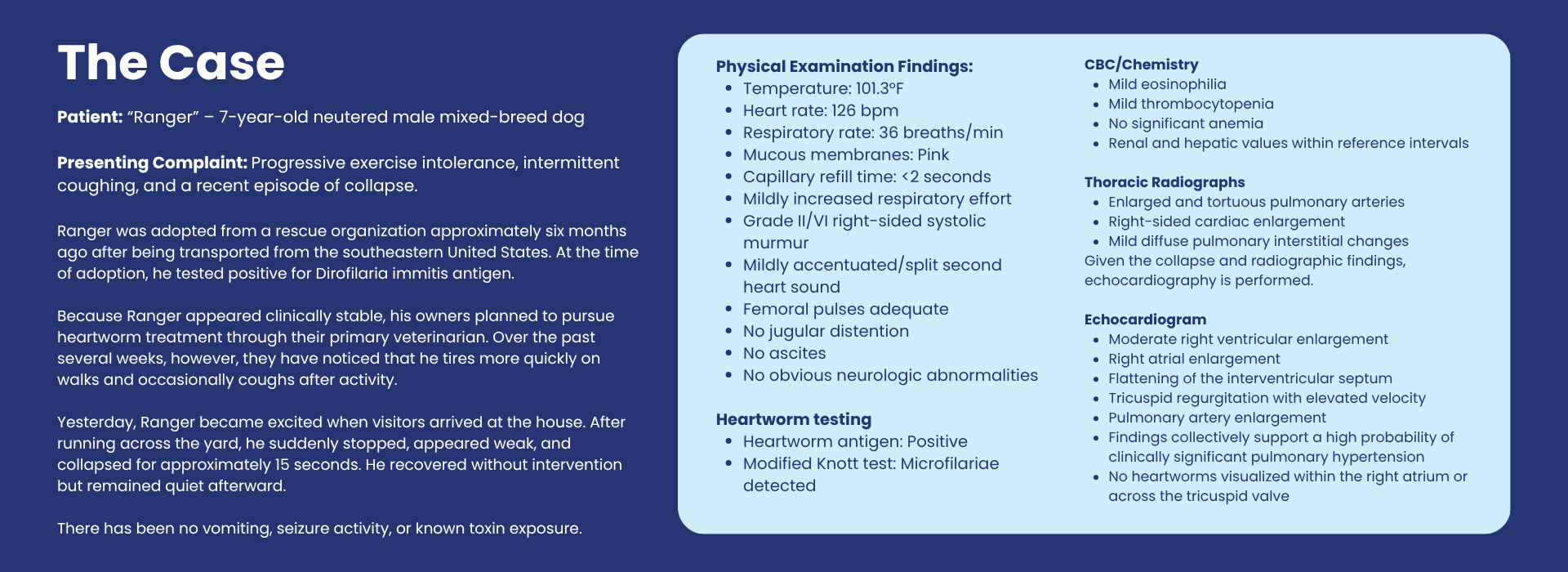
- Progressive exercise intolerance
- Coughing
- A syncopal episode
- Pulmonary arterial enlargement
- Right-sided cardiac remodeling
- Echocardiographic evidence supporting clinically significant pulmonary hypertension
Those findings change the risk profile of the patient.
And one finding in particular should make the clinician reconsider how quickly Ranger moves into routine adulticide treatment:
Pulmonary hypertension.
How Specialists Typically View This Case
A cardiologist or internal medicine specialist would view Ranger as a dog with clinically important cardiopulmonary consequences of heartworm disease, not simply a dog with a positive heartworm test.
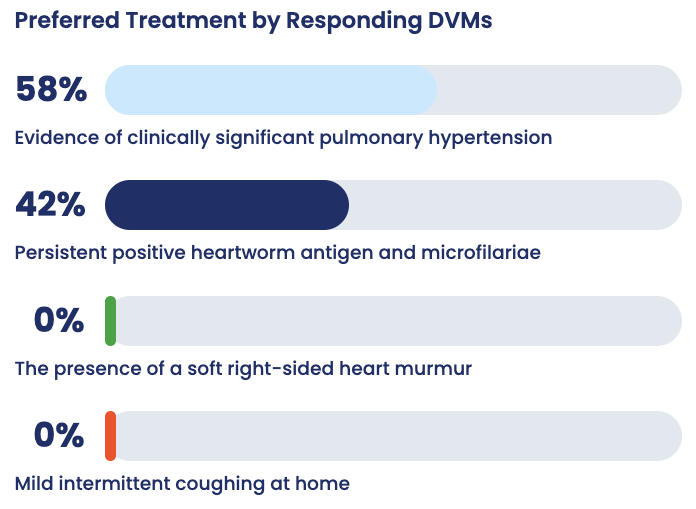
The specialist answer is:
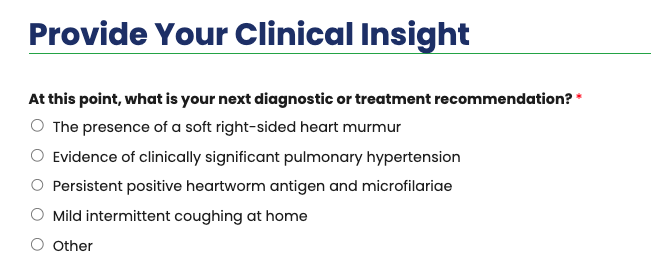
- Evidence of clinically significant pulmonary hypertension
Pulmonary hypertension is a recognized and potentially serious complication of canine heartworm disease. The ACVIM pulmonary hypertension consensus specifically classifies Dirofilaria-associated disease among the causes of canine pulmonary hypertension.
That matters because adulticide therapy does not simply make adult worms disappear.
As worms die, their fragments lodge within smaller pulmonary arteries and arterioles, contributing to pulmonary thromboembolism and inflammatory vascular injury. The American Heartworm Society emphasizes that dogs demonstrating significant clinical heartworm disease should be stabilized before adulticide treatment.
Ranger already has compromised pulmonary vasculature.
That makes stabilization and risk assessment particularly important before moving forward.
What Is Happening in Heartworm-Associated Pulmonary Hypertension?
Adult heartworms primarily inhabit the pulmonary arteries.
Their presence causes much more than mechanical obstruction.
Chronic infection can produce:
- Pulmonary arterial endothelial injury
- Proliferative endarteritis
- Vascular remodeling
- Inflammation
- Increased pulmonary vascular resistance
- Pulmonary thromboembolism
- Hypoxemia
As resistance within the pulmonary circulation increases, the right ventricle has to generate greater pressure to move blood through the lungs.
Over time, this pressure load can lead to right ventricular hypertrophy and remodeling.
If the disease continues to progress, the right side of the heart may eventually fail.
Pulmonary hypertension is therefore not simply an echocardiographic number.
It represents a meaningful change in cardiopulmonary physiology.
Why Did Ranger Collapse?
The episode of collapse is one of the most important clues in this case.
Syncope in a dog with pulmonary hypertension can occur when the cardiovascular system is unable to maintain adequate cerebral perfusion during periods of increased demand.
At rest, Ranger may compensate reasonably well.
But excitement or exercise increases the body’s demand for cardiac output.
A diseased pulmonary vascular bed cannot necessarily accommodate that increased blood flow.
The right ventricle is forced to pump against elevated resistance, and its ability to increase output may become limited.
The result can be a transient reduction in systemic and cerebral perfusion.
And the owner sees:
Collapse.
Syncope, exercise intolerance, cough, tachypnea, and respiratory difficulty are all clinical signs that can occur in dogs with pulmonary hypertension.
That is why Ranger’s collapse should not be dismissed as excitement, weakness, or simply another nonspecific sign of heartworm infection.
Why the Echocardiogram Matters
Echocardiography is central to the clinical assessment of suspected pulmonary hypertension, but specialists do not diagnose or grade PH based on one Doppler measurement alone.
The ACVIM consensus recommends integrating multiple findings, including clinical signs and echocardiographic changes affecting the right heart, pulmonary artery, interventricular septum, and pulmonary blood flow.
Ranger has several concerning findings:
Right ventricular enlargement
The right ventricle has undergone remodeling in response to increased pressure.
Right atrial enlargement
This suggests the pressure burden is affecting more than the pulmonary arteries.
Interventricular septal flattening
Increasing right ventricular pressure can alter the normal geometry between the right and left ventricles.
Pulmonary artery enlargement
This supports chronic pulmonary vascular disease.
Elevated tricuspid regurgitation velocity
When interpretable, this provides additional evidence supporting elevated pulmonary arterial pressure.
Together with Ranger’s syncope and exercise intolerance, these findings paint a much more important picture than any one measurement alone.
Why Adulticide Treatment Requires Additional Thought
This is the heart of the case.
The goal remains to eliminate Ranger’s heartworm infection.
Pulmonary hypertension is not a reason to leave the adult worms untreated indefinitely.
But it may be a reason to stabilize the patient before adulticide therapy and to plan treatment more carefully.
When melarsomine kills adult heartworms, the dead and dying worms eventually fragment.
Those fragments travel into smaller pulmonary vessels.
This creates an unavoidable degree of pulmonary thromboembolism.
The American Heartworm Society therefore considers strict exercise restriction essential throughout treatment and recovery because physical activity can increase the risk and severity of cardiopulmonary complications.
In a dog whose pulmonary circulation is already significantly compromised, the stakes are higher.
A study evaluating dogs before and after the AHS adulticide protocol found pulmonary hypertension in 68% of the studied heartworm-positive dogs and noted the importance of vascular injury and thromboembolic effects associated with worm death.
The message is not:
Don’t treat the heartworms.
It is:
Understand the cardiopulmonary disease you are treating before you kill the worms.
What Does Stabilization Mean?
There is not one universal stabilization protocol for every heartworm-positive dog with pulmonary hypertension.
Treatment depends on the severity and underlying hemodynamics.
The American Heartworm Society notes that dogs with significant clinical signs should be stabilized before adulticide treatment and that management may require therapies directed at inflammation, vascular tone, cardiac function, fluid balance, or other consequences of advanced disease.
For Ranger, specialist evaluation could include consideration of:
- Strict exercise restriction
- Oxygen supplementation if hypoxemic
- Assessment for right-sided congestive heart failure
- Evaluation for pulmonary thromboembolic disease
- Pulmonary vasodilator therapy when clinically appropriate
- Management of significant right ventricular dysfunction
- Careful timing of adulticide therapy
- Close monitoring throughout treatment
Sildenafil, a phosphodiesterase-5 inhibitor, is commonly used in dogs with clinically important pulmonary hypertension because of its pulmonary vasodilatory effects. Studies in dogs with PH have reported improvements in clinical signs and quality of life, although response varies with the cause and severity of disease.
Its use should be based on the patient’s overall clinical and echocardiographic picture rather than simply the presence of heartworm infection.
A Critical Distinction: Pulmonary Hypertension vs. Caval Syndrome
Ranger does not currently have evidence of caval syndrome.
That distinction is important.
Caval syndrome occurs when a large burden of heartworms moves into the right heart and interferes with blood flow and tricuspid valve function.
Affected dogs may develop:
- Acute weakness or collapse
- Severe respiratory distress
- Hemolytic anemia
- Hemoglobinemia or hemoglobinuria
- Jugular distention
- Right-sided heart failure
- Hypotension
- Cardiovascular collapse
When caval syndrome is present, rapid mechanical extraction of the worms is generally required, rather than simply proceeding with standard adulticide therapy.
Ranger’s echocardiogram shows no worms within the right atrium or across the tricuspid apparatus, and he does not have the classic hemolytic or hemodynamic findings of caval syndrome.
But his collapse should still prompt the veterinarian to look for it.
In other words:
Not every collapsing heartworm-positive dog has caval syndrome—but every collapsing heartworm-positive dog deserves careful evaluation for advanced cardiopulmonary disease.
Why Not Answer A: The Soft Right-Sided Murmur?
A heart murmur deserves investigation, particularly in a heartworm-positive patient.
But the intensity of a murmur does not necessarily correspond to disease severity.
Ranger’s murmur may reflect tricuspid regurgitation associated with right ventricular remodeling and elevated pulmonary pressures.
The murmur is therefore a clue.
The pulmonary hypertension is the clinically meaningful finding behind it.
Treating the murmur as the primary concern would focus on the sound rather than the physiology producing it.
Why Not Answer C: Persistent Positive Heartworm Antigen and Microfilariae?
This finding confirms that Ranger remains infected and needs appropriate heartworm therapy.
But it does not, by itself, distinguish Ranger from many other heartworm-positive dogs.
Most infected dogs are asymptomatic or only mildly symptomatic and can undergo adulticide therapy without major complications. Severe problems are more closely associated with the degree of pulmonary vascular and parenchymal injury produced by infection.
The positive test tells us:
Ranger has heartworms.
The pulmonary hypertension tells us:
Those heartworms have produced clinically significant cardiopulmonary consequences.
That second piece of information is what changes management.
Why Not Answer D: Mild Intermittent Coughing?
Coughing is common in canine heartworm disease.
It may reflect pulmonary vascular inflammation, pulmonary parenchymal changes, or other cardiopulmonary consequences of infection.
It should not be ignored.
But a mild cough alone does not carry the same management implications as syncope combined with right-heart remodeling and echocardiographic evidence of pulmonary hypertension.
In this case, the cough is another piece of the puzzle.
It is not the finding that most changes the plan.
The Most Important Treatment May Be the Least Exciting One
There is another important lesson in Ranger’s case:
Exercise restriction matters.
It can sound like the simplest part of heartworm treatment, particularly compared with doxycycline, melarsomine, echocardiography, or pulmonary vasodilators.
But it is not optional.
When adult worms die, fragments lodge in the pulmonary circulation. Increased physical activity increases pulmonary blood flow through an already damaged vascular bed and can increase the severity of cardiopulmonary complications.
The American Heartworm Society explicitly describes exercise restriction during treatment and recovery as essential for minimizing complications.
For a dog like Ranger, that instruction deserves particular emphasis.
“Keep him quiet” is not enough.
Owners need to understand that running, vigorous play, excitement, and uncontrolled activity can create meaningful risk.
Practical Application in General Practice
When a heartworm-positive dog is clinically well, the diagnostic and treatment pathway may be relatively straightforward.
When that patient presents with:
- Exercise intolerance
- Syncope or collapse
- Tachypnea
- Dyspnea
- Significant coughing
- Pulmonary arterial enlargement
- Right-sided cardiac enlargement
- Ascites or jugular distention
the question should change from:
“When do we start the heartworm protocol?”
to:
“How much cardiopulmonary disease has this infection already caused?”
Thoracic radiographs and echocardiography can become particularly valuable in these patients.
And if significant pulmonary hypertension, right ventricular dysfunction, congestive heart failure, suspected pulmonary thromboembolism, or caval syndrome is identified, stabilization and specialist involvement may substantially change how the patient is managed before and during adulticide therapy.
Specialist Takeaway
A positive heartworm test identifies the infection. It does not tell you the severity of the disease.
Ranger’s pulmonary hypertension is the finding that changes this case.
His exercise intolerance, collapse, pulmonary arterial changes, right-heart remodeling, and echocardiographic abnormalities demonstrate that the infection has already produced meaningful cardiopulmonary consequences.
The goal is still definitive heartworm treatment.
But specialists would recommend stabilizing and risk-stratifying Ranger before proceeding with adulticide therapy, rather than treating him like an otherwise asymptomatic heartworm-positive dog.
Before treating the parasite, understand what the parasite has already done to the patient.
References
American Heartworm Society. Current Canine Guidelines for the Prevention, Diagnosis, and Management of Heartworm (Dirofilaria immitis) Infection in Dogs. American Heartworm Society, current online ed.
Reinero, Carol, et al. “ACVIM Consensus Statement Guidelines for the Diagnosis, Classification, Treatment, and Monitoring of Pulmonary Hypertension in Dogs.” Journal of Veterinary Internal Medicine, vol. 34, 2020.
Serrano-Parreño, B., et al. “Pulmonary Hypertension in Dogs with Heartworm before and after the Adulticide Protocol Recommended by the American Heartworm Society.” Veterinary Parasitology, vol. 236, 2017, pp. 34–37.
Ames, Marisa K., and Clarke E. Atkins. “Treatment of Dogs with Severe Heartworm Disease.” Veterinary Parasitology, 2020.
Brown, Andrea J., et al. “Sildenafil Citrate Therapy in 22 Dogs with Pulmonary Hypertension.” Journal of Veterinary Internal Medicine, vol. 24, 2010.