

Clinical Perspective: Recognizing Systemic Fungal Disease
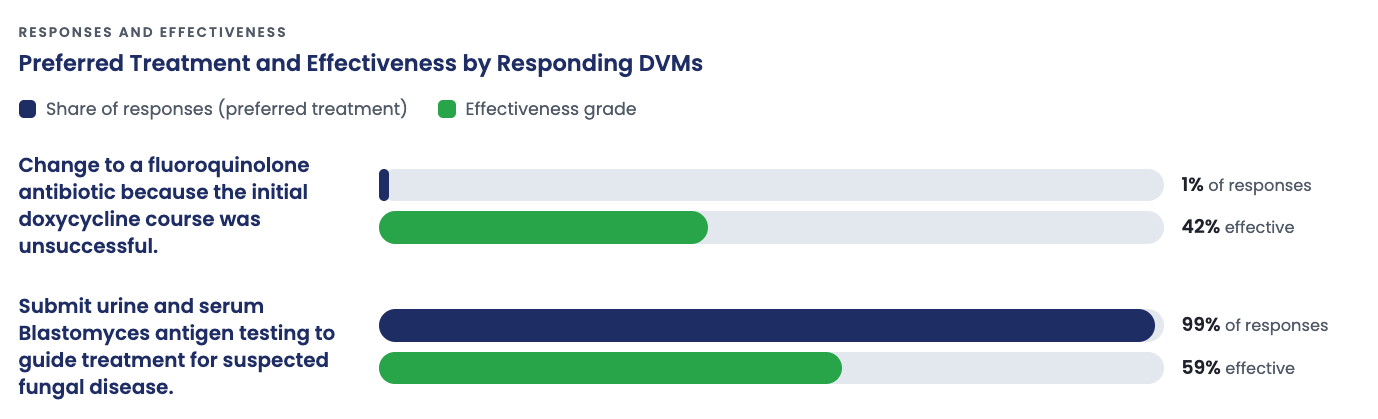
The recommended approach is A: Submit urine and serum Blastomyces antigen testing to guide treatment for suspected fungal disease.
Scout’s persistent respiratory illness, geographic exposure, and draining skin lesions raise concern for systemic fungal infection, including blastomycosis. His findings warrant targeted diagnostic testing rather than simply changing antibiotics. Urine and serum Blastomyces antigen testing can help support the diagnosis, although cross-reactivity with other fungal infections must be considered.
From a general practice perspective, the priority is to assess respiratory stability, submit fungal antigen testing, and evaluate for disease beyond the lungs, particularly ocular involvement. Fine-needle aspiration of an accessible skin lesion may also reveal characteristic broad-based budding yeast and support prompt treatment before antigen results return. If Scout deteriorates or becomes hypoxemic, stabilization and timely treatment should not be delayed while awaiting test results.
The key takeaway is that failure to respond to antibiotics should prompt diagnostic reassessment, not simply a change in antibiotics. In Scout’s case, clinical findings and geographic exposure support investigating blastomycosis, with antigen testing and potentially rapid lesion cytology helping direct appropriate care.
Want to learn more, read below.
——————————————————
When Antibiotics Aren’t Working: Recognizing Blastomycosis in Dogs
Recommended Answer: A — Submit urine and serum Blastomyces antigen testing to guide treatment for suspected fungal disease.
Scout’s case illustrates an important clinical challenge: recognizing when a patient initially treated for a common infectious condition may actually have a systemic fungal disease requiring an entirely different treatment approach.
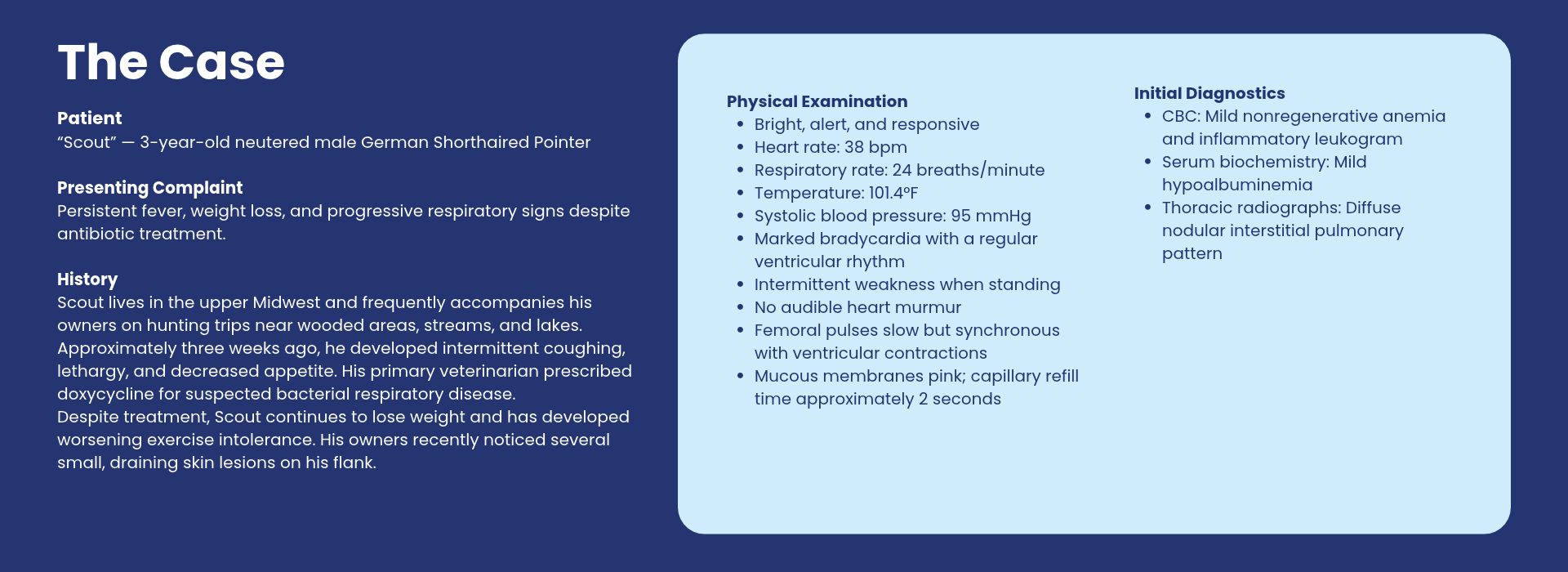
Scout, a 3-year-old German Shorthaired Pointer, presents with persistent fever, weight loss, worsening respiratory signs, and draining skin lesions despite receiving doxycycline. His history of hunting near waterways in the upper Midwest and diffuse nodular pulmonary changes raise suspicion for systemic fungal disease, particularly blastomycosis. However, the organism has not yet been identified.
For the general practitioner, the priority is to recognize the pattern, assess respiratory stability, and pursue targeted diagnostic testing, including urine and serum Blastomyces antigen testing. Fine-needle aspiration of a skin lesion may offer a rapid additional route to diagnosis. For a veterinary internal medicine specialist, evaluation expands to disease staging, treatment selection, and management of severe pulmonary or disseminated infection.
The key clinical distinction is that failure to respond to antibiotics, combined with endemic exposure, pulmonary changes, and skin lesions, should prompt investigation for systemic fungal disease rather than another empirical antibiotic course.
Understanding Canine Blastomycosis
Blastomycosis is a systemic fungal infection caused by thermally dimorphic fungi in the genus Blastomyces. Infection most commonly occurs after inhalation of environmental fungal spores, which transform into yeast within the host.
In North America, blastomycosis is associated with regions surrounding the Great Lakes, Mississippi River, Ohio River, and other endemic areas, although geographic distribution is not limited to these locations.
Dogs may be exposed through outdoor activities involving soil disturbance, wooded environments, or areas near waterways.
Once inhaled, the organism primarily affects the lungs but may spread to other tissues, including the skin, eyes, lymph nodes, bones, and central nervous system.
Clinical signs vary depending on the extent and location of infection. Common findings include fever, lethargy, weight loss, coughing, exercise intolerance, and respiratory distress.
Some patients present with predominantly respiratory disease, while others develop dermatologic, ocular, orthopedic, or neurologic manifestations.
In Scout’s case, the combination of pulmonary abnormalities and cutaneous lesions suggests infection involving multiple organ systems.
Why does blastomycosis resemble other diseases?
Blastomycosis can be difficult to recognize early because its clinical presentation overlaps with several more common conditions.
Respiratory signs may initially suggest bacterial pneumonia or another infectious respiratory disease. Cutaneous lesions may resemble bacterial abscesses, foreign-body reactions, or neoplasia.
Thoracic radiographs can reveal nodular, interstitial, bronchointerstitial, or alveolar pulmonary patterns, none of which is entirely specific for blastomycosis.
The presence of persistent fever and weight loss further broadens the differential diagnosis.
At this stage, Scout has not had cytologic confirmation. Fine-needle aspiration of an accessible cutaneous lesion may reveal large, broad-based budding yeast characteristic of Blastomyces and provide rapid evidence supporting treatment.
When characteristic organisms are identified in an appropriate clinical context, cytology can support prompt antifungal treatment, sometimes before antigen testing results return. If cytology is nondiagnostic, it does not exclude blastomycosis.
The General Practitioner’s Approach: Recognize, Stabilize, and Treat
- Reassess the diagnosis when the clinical picture changes
Scout was initially treated with doxycycline for suspected bacterial respiratory disease.
Empirical antibiotic treatment may be reasonable in selected patients when bacterial infection is suspected, but failure to improve should prompt reconsideration of the original diagnosis rather than automatic escalation to broader antibiotics.
Several findings in Scout’s case warrant a different diagnostic approach:
- Persistent fever and progressive weight loss.
- Worsening respiratory signs despite antibiotic therapy.
- Diffuse nodular interstitial changes on thoracic radiographs.
- Draining cutaneous lesions.
- A history of outdoor exposure in a region where blastomycosis occurs.
- Accessible cutaneous lesions that may be sampled for cytology while antigen testing is pending.
Although none of these findings independently confirms blastomycosis, their combination raises sufficient suspicion to justify targeted fungal antigen testing and consideration of lesion cytology.
The next step is to submit urine and serum Blastomyces antigen testing, assess disease severity, and consider fine-needle aspiration of a cutaneous lesion for a potentially faster diagnosis. Treatment timing should be guided by clinical stability and the strength of the evidence, rather than by an automatic repeat course of antibiotics.
- Determine whether Scout requires hospitalization
Not every dog with blastomycosis requires hospitalization, but pulmonary involvement can become severe and potentially life-threatening.
The GP should evaluate:
- Respiratory rate and effort.
- Oxygen saturation, when it can be obtained without excessive stress.
- Mucous membrane color and overall perfusion.
- Ability to maintain hydration and adequate nutrition.
- Severity and progression of pulmonary abnormalities.
- Evidence of additional organ involvement.
Scout has mildly increased respiratory effort and progressive exercise intolerance. These findings warrant careful assessment of oxygenation and close monitoring.
If he is hypoxemic, demonstrates significant respiratory distress, or is unable to maintain hydration and nutrition, hospitalization is appropriate.
Oxygen supplementation should be provided when indicated, while avoiding unnecessary handling or stressful diagnostic procedures in a patient with respiratory compromise.
Dogs with extensive pulmonary blastomycosis may experience clinical deterioration early in antifungal treatment, so the decision between outpatient management and hospitalization should consider both current stability and the potential for worsening respiratory function.
- Initiate appropriate systemic antifungal treatment
For many dogs with blastomycosis, itraconazole is a commonly recommended first-line treatment, particularly when disease is not immediately life-threatening and there is no specific contraindication.
Itraconazole has demonstrated clinical efficacy against Blastomyces and is widely used for systemic treatment in dogs.
However, antifungal selection should account for disease severity, organ involvement, formulation, cost, concurrent medications, and potential adverse effects.
For dogs with severe pulmonary disease, central nervous system involvement, or other complicated presentations, alternative or additional treatment strategies may be necessary.
If blastomycosis is confirmed or strongly supported by additional findings, Scout may need prompt systemic antifungal therapy. The choice between outpatient oral treatment and more intensive inpatient therapy depends on his respiratory stability and overall condition.
- Evaluate for disseminated infection
Blastomycosis can affect multiple organ systems, and clinically apparent pulmonary disease does not necessarily represent the full extent of infection.
A focused evaluation should include a thorough physical examination and targeted assessment for extrapulmonary involvement.
Particular attention should be given to:
Eyes: Ocular blastomycosis may cause uveitis, chorioretinitis, retinal detachment, glaucoma, or vision loss. A complete ophthalmic examination is important, even when owners have not reported obvious visual abnormalities.
Skin and lymph nodes: Cutaneous nodules, draining tracts, and enlarged lymph nodes may provide accessible sites for cytologic confirmation.
Musculoskeletal system: Bone involvement can produce lameness, localized pain, or swelling.
Neurologic system: Central nervous system infection may cause seizures, behavioral changes, ataxia, or other neurologic abnormalities.
For Scout, his draining skin lesions already indicate extrapulmonary involvement. An ophthalmic examination is particularly important because ocular disease can affect treatment decisions and prognosis.
- Establish a monitoring plan
Antifungal treatment for blastomycosis generally requires an extended course lasting months rather than weeks.
Monitoring should include:
- Clinical improvement in fever, appetite, weight, activity, and respiratory signs.
- Serial assessment of pulmonary abnormalities when appropriate.
- Monitoring for medication adverse effects, particularly hepatotoxicity.
- Repeat serum biochemistry during prolonged azole therapy.
- Reassessment of any affected extrapulmonary sites.
- Consideration of fungal antigen testing to help monitor treatment response.
Urine Blastomyces antigen testing can be useful in diagnosis and monitoring, but results require interpretation in context.
Antigen assays may cross-react with other fungal infections, particularly histoplasmosis. Antigen concentrations can also remain detectable during treatment, and a single result should not independently determine whether therapy is successful or complete.
For Scout, treatment duration should be guided by clinical response, disease distribution, and follow-up findings rather than a fixed number of weeks.
The Veterinary Internal Medicine Specialist’s Perspective: Assessing Severity and Preventing Complications
For an internal medicine specialist, Scout’s history, pulmonary abnormalities, and cutaneous lesions raise substantial suspicion for blastomycosis, but the initial workup has not yet identified the organism. The primary questions are how to establish the diagnosis promptly, how extensively disease may have spread, and whether his pulmonary condition requires hospitalization.
- Confirm the diagnosis without delaying treatment
Fine-needle aspiration of Scout’s cutaneous lesions may sometimes reveal characteristic broad-based budding yeast organisms, providing rapid cytologic support for blastomycosis.
If characteristic organisms are identified in a compatible clinical setting, cytology can support initiation of antifungal treatment before antigen test results are available. A nondiagnostic aspirate does not rule out infection.
Urine and serum Blastomyces antigen testing are appropriate next diagnostic steps and may provide supporting evidence and a baseline for monitoring. In a study of 46 dogs with confirmed blastomycosis, urine antigen testing demonstrated 93.5% sensitivity, compared with 87% for serum antigen testing.
However, antigen testing is not perfectly specific for Blastomyces because cross-reactivity with Histoplasma can occur.
For Scout, urine and serum antigen samples should be submitted now. Concurrent aspiration of an accessible skin lesion may provide faster diagnostic evidence. If his respiratory condition worsens or cytology strongly supports blastomycosis, treatment may be warranted before antigen results return.
- Determine the extent of pulmonary and extrapulmonary disease
Scout’s diffuse pulmonary abnormalities and cutaneous lesions indicate that the infection is not limited to a single location.
The specialist would evaluate respiratory function and examine other organ systems, particularly the eyes, lymph nodes, bones, and nervous system.
Ocular involvement deserves special attention. Published veterinary references describe ocular disease in approximately 30%–50% of dogs with blastomycosis. Manifestations include uveitis, retinal disease, glaucoma, and vision loss.
A dilated fundic examination, when clinically appropriate, may reveal abnormalities not apparent during a routine examination.
The specialist would also consider additional imaging or sampling if Scout develops lameness, neurologic abnormalities, or other signs suggesting dissemination.
- Select treatment according to disease severity
Itraconazole is a standard first-line antifungal for canine blastomycosis. The Merck Veterinary Manual describes a commonly used regimen of 5 mg/kg orally every 24 hours, with treatment continuing for at least three months and until active disease is no longer apparent.
Treatment should be individualized, particularly when patients have severe pulmonary disease, significant ocular involvement, or central nervous system infection.
For dogs with fulminant pulmonary blastomycosis and hypoxemia, combination therapy with amphotericin B and itraconazole may be recommended.
Amphotericin B requires careful administration and monitoring because of its potential nephrotoxicity. Different formulations have different safety profiles, and the choice of treatment should be directed by the specialist and the patient’s condition.
Scout’s mildly increased respiratory effort does not automatically mean he requires amphotericin B. His oxygenation, overall stability, and progression would help determine whether oral itraconazole is sufficient or more intensive treatment is necessary.
- Anticipate early respiratory deterioration
One of the most important considerations in pulmonary blastomycosis is the potential for worsening respiratory function shortly after antifungal treatment begins.
Inflammation associated with fungal organism death may contribute to deterioration in patients with extensive pulmonary disease.
Severely affected dogs are particularly vulnerable during the initial treatment period.
The Merck Veterinary Manual notes that approximately half of dogs with severe pulmonary blastomycosis may die during the first week of treatment, emphasizing the importance of recognizing high-risk patients early. This figure applies to severely affected patients, not to every dog diagnosed with blastomycosis.
Selected patients with severe respiratory inflammation may receive a short course of anti-inflammatory glucocorticoids under specialist supervision. This is a carefully considered adjunct to antifungal therapy, not a substitute for it.
Routine immunosuppressive corticosteroid treatment without antifungal coverage would be inappropriate for Scout.
- Monitor treatment effectiveness and potential relapse
Treatment response should be evaluated using a combination of clinical findings, imaging, laboratory results, and antigen testing.
A prospective study of dogs treated for systemic blastomycosis found that urine antigen concentrations were useful for evaluating active disease and monitoring response, although antigen testing did not detect every instance of persistent disease or relapse.
A specialist may recommend serial urine antigen testing alongside clinical reassessment and thoracic imaging.
The goal is to document sustained improvement and reduce the risk of discontinuing treatment before infection is adequately controlled.
A 2026 prospective study of 14 dogs also investigated therapeutic drug monitoring of itraconazole, reflecting growing interest in individualized dosing because serum drug concentrations can vary substantially between patients. This approach may be particularly useful when treatment response is inadequate or drug absorption is uncertain, although the small study does not establish a universal monitoring protocol.
What Does the Research Tell Us?
| Clinical consideration | Evidence-supported interpretation |
| Broad-based budding yeast if found on lesion cytology | Can rapidly support Blastomyces infection before antigen results return |
| Persistent respiratory signs despite antibiotics | Warrants reconsideration of bacterial pneumonia and investigation of other causes |
| Pulmonary and cutaneous involvement | Raises concern for disseminated fungal disease |
| Itraconazole | Standard first-line treatment for many dogs with blastomycosis |
| Severe pulmonary disease or hypoxemia | May require hospitalization, oxygen, and amphotericin B-based treatment |
| Urine and serum antigen testing | Useful for diagnosis and treatment monitoring, but results must be interpreted alongside clinical findings |
| Clinical improvement after treatment | Encouraging, but does not necessarily indicate that treatment can be discontinued |
These principles are supported by veterinary infectious disease reviews, published diagnostic studies, and clinical treatment recommendations.
Why the Other Management Options Fall Short
Option B: Change to a fluoroquinolone antibiotic
Scout’s lack of response to doxycycline alone does not establish that his infection is resistant to antibiotics.
His geographic exposure, pulmonary findings, and skin lesions warrant investigation for fungal disease; broadening antibacterial treatment without further diagnostics could delay appropriate care.
Changing antibacterial medications without addressing the fungal infection would delay appropriate treatment.
A secondary bacterial infection could occasionally require separate management, but no evidence in this case establishes that as the primary problem.
Option C: Begin immunosuppressive prednisone
Scout’s skin lesions and pulmonary abnormalities raise concern for infection, including systemic fungal disease. Without evidence of sterile immune-mediated inflammation, immunosuppressive prednisone would be an inappropriate initial choice.
Administering immunosuppressive prednisone without treating the underlying fungal infection could impair the patient’s ability to control the infection.
Although carefully selected patients with severe pulmonary blastomycosis may benefit from short-term anti-inflammatory glucocorticoids as an adjunct to antifungal treatment, that is substantially different from treating presumed sterile inflammation with immunosuppressive medication.
Option D: Surgically excise the cutaneous nodules
Scout’s cutaneous lesions are manifestations of a systemic fungal infection rather than an isolated surgical problem.
Removing the nodules would not address pulmonary infection or potential dissemination to other organs.
Surgery may occasionally be considered for selected localized complications, but systemic antifungal treatment remains the foundation of management.
Bridging General Practice and Specialty Care
Scout’s case demonstrates how general practitioners can play a critical role in identifying systemic fungal disease before advanced diagnostics or referral become necessary.
A GP who recognizes the combination of respiratory illness, geographic exposure, and draining skin lesions can promptly submit antigen testing, consider sampling an accessible lesion, and identify patients who require more intensive care.
The internal medicine specialist can then provide additional guidance on staging, antifungal selection, treatment monitoring, and management of complications.
Importantly, referral is not required for every dog with blastomycosis. Clinically stable patients with uncomplicated disease may be managed in general practice with appropriate treatment and follow-up.
However, patients with significant respiratory compromise, ocular disease, neurologic involvement, poor treatment response, or complex medication considerations benefit from specialist consultation.
The shared goal is early recognition, effective antifungal treatment, and careful monitoring throughout recovery.
Clinical Takeaway: When the Diagnosis Changes, the Treatment Must Change
Scout’s case reinforces three important principles:
- Failure to respond to antibiotics should prompt diagnostic reassessment. Persistent respiratory signs, systemic illness, and new extrapulmonary findings warrant reconsideration of the initial diagnosis.
- Targeted testing can clarify the diagnosis. Urine and serum Blastomyces antigen assays support evaluation for fungal disease, while aspiration of a cutaneous lesion may reveal characteristic broad-based budding yeast before antigen results return.
- Treatment must account for the entire patient. Pulmonary severity, ocular involvement, potential dissemination, and long-term monitoring all influence successful management.
For Scout, the recommended next step is to submit urine and serum Blastomyces antigen testing, assess respiratory stability, and consider lesion cytology for faster diagnostic support. If his condition worsens, necessary stabilization and treatment should not wait for send-out results.
The most important lesson is to recognize when persistent illness warrants a new diagnostic direction. Timely fungal testing, opportunistic lesion cytology, assessment of disease severity, and appropriate treatment are central to managing suspected blastomycosis.
Veterinary References
- Brömel, Catharina, and Jane E. Sykes. “Epidemiology, Diagnosis, and Treatment of Blastomycosis in Dogs and Cats.” Veterinary Clinics of North America: Small Animal Practice, 2005. PubMed.
- Merck Veterinary Manual. “Blastomycosis in Animals.” Reviewed by veterinary specialists; updated July 2026. Read reference.
- Merck Veterinary Manual. “Fungal Pneumonia in Small Animals.” Read reference.
- “Antigen and Antibody Testing for the Diagnosis of Blastomycosis in Dogs.” Journal of Veterinary Internal Medicine, vol. 22, no. 4, 2008, pp. 839–843. Full article.
- “Serum and Urine Blastomyces Antigen Concentrations as Markers of Clinical Remission in Dogs Treated for Systemic Blastomycosis.” Journal of Veterinary Internal Medicine, 2014. PubMed.
- “Therapeutic Drug Monitoring of Itraconazole in Treatment of Blastomycosis in Dogs.” Journal of Veterinary Internal Medicine, vol. 40, no. 1, 2026. Full article.