
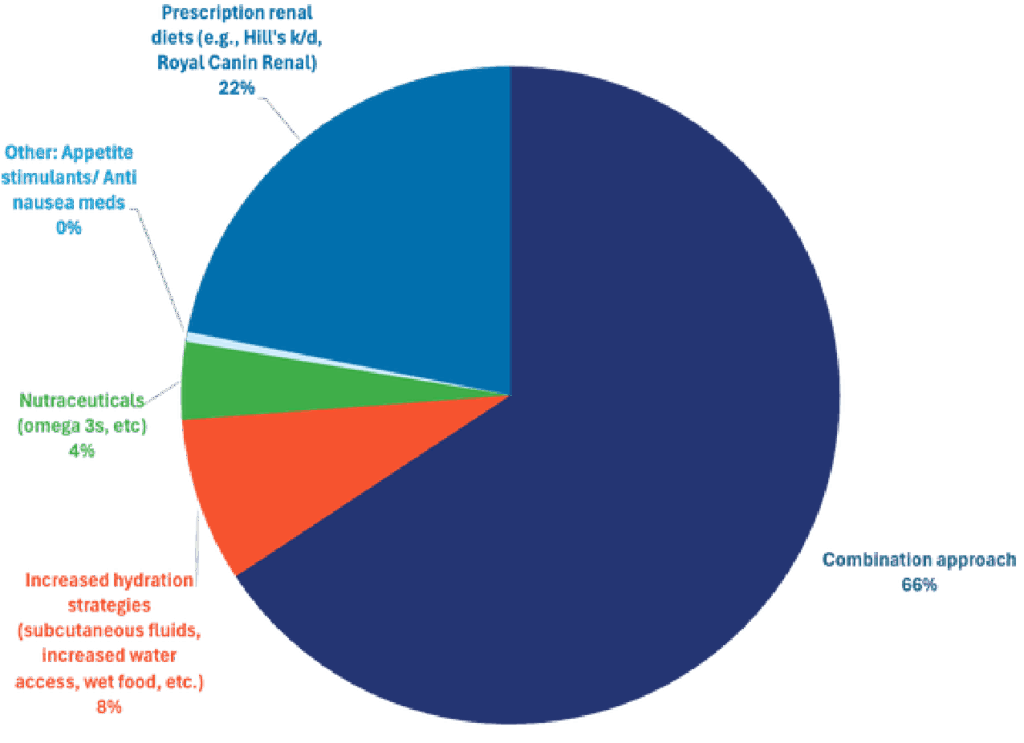
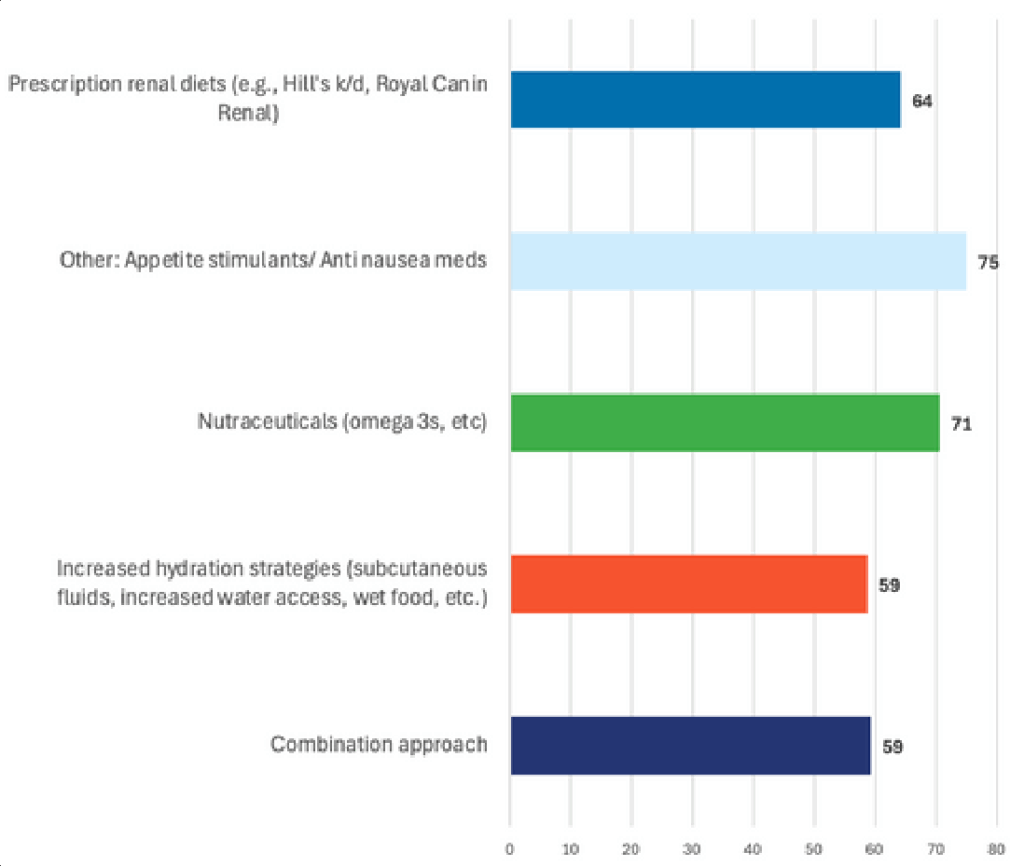
Among DVMs who responded, 66% reported using a combination approach to manage early-stage CKD; however, most still identified a prescription renal diet as the single most effective intervention.

Treatment Selections
Effectiveness
Specialists Insight
Veterinary specialists generally consider a combination approach—anchored by prescription renal diets and supported by hydration strategies—to be the most effective non-pharmaceutical method for improving the quality of life in cats with early-stage chronic kidney disease (CKD). Nutraceuticals may be integrated as adjunctive therapies but are not typically the primary intervention.
Most Effective Approach
Prescription renal diets are the cornerstone of early CKD management. These diets are specifically formulated to restrict phosphorus and protein to moderate levels, increase omega-3 fatty acids, and provide alkalinizing agents and enhanced caloric density. Multiple clinical trials have shown that cats with CKD fed therapeutic renal diets experience significantly fewer uremic crises, slower disease progression, and longer median survival times compared with cats fed maintenance diets (Elliott et al.; Ross et al.; Plantinga et al.).
Increased hydration strategies play a critical complementary role. Dehydration can exacerbate renal damage and accelerate disease progression. Veterinary specialists recommend increasing water intake through feeding canned or rehydrated diets, adding water or broth to food, providing multiple water sources, and considering the use of feline water fountains. Studies have shown that increased dietary moisture raises urine volume, reduces urine specific gravity, and helps maintain hydration status (Zanghi et al.; Zoran et al.).
Nutraceuticals such as omega-3 fatty acids, antioxidants, and prebiotics may provide supportive benefits in modulating inflammation, maintaining renal perfusion, and preserving body condition. However, these should be used within evidence-based parameters and only as supplements to dietary and hydration management, as the scientific evidence for their standalone effectiveness remains limited (Finch et al.).
Therefore, an integrated management plan that combines a therapeutic renal diet, enhanced hydration, and selected nutraceutical support is widely considered the optimal non-pharmaceutical strategy.
Clinical Outcomes and Expected Response
Based on published data and collective clinical experience, veterinary specialists observe that approximately 70–80% of cats with early-stage CKD show measurable improvement in quality-of-life indicators within one to three months when managed with this combination approach. Improvements typically include stabilized or increased appetite, enhanced hydration and energy levels, decreased vomiting, better stool quality, and maintenance or gain of lean body mass.
Longitudinal studies demonstrate that cats fed prescription renal diets exhibit significant extensions in survival time and reduced risk of uremic crises compared to those fed maintenance diets. These findings reinforce the necessity of nutritional management as the foundation of early-stage CKD care (Elliott et al.; Plantinga et al.; Ross et al.).
Best Practices for Managing Early-Stage CKD in Cats
A comprehensive, proactive management plan is essential to preserve renal function and optimize patient welfare. The following best practices are widely endorsed:
Baseline Assessment
- Confirm diagnosis using IRIS staging based on serum creatinine, symmetric dimethylarginine (SDMA), and urinalysis (including urine specific gravity and proteinuria).
- Establish baseline ments of blood pressure, body weight, and body condition score (BCS).
- Evaluate serum phosphorus, calcium, and potassium, if available, to refine stage assessment and dietary planning.
IRIS Staging Guidelines for Feline Chronic Kidney Disease
| IRIS Stage | Serum Creatinine (mg/dL) | SDMA (µg/dL) | Urine Specific Gravity (USG) | Clinical Notes and Early Priorities |
|---|---|---|---|---|
| Stage 1 | < 1.6 | < 18 | > 1.035 | Non-azotemic; identify risk factors (proteinuria, hypertension, FGF-23, or early phosphorus elevation). Begin renal diet if trending upward. |
| Stage 2 | 1.6–2.8 | 18–25 | Variable | Early azotemia. Initiate renal diet, monitor phosphorus and hydration. Evaluate for hypertension and proteinuria. |
| Stage 3 | 2.9–5.0 | 26–38 | Often < 1.035 | Moderate CKD. Add phosphate binders and blood pressure management. Focus on symptom control and nutrition. |
| Stage 4 | > 5.0 | > 38 | Often < 1.020 | Advanced CKD. Manage uremic symptoms, maintain hydration, and optimize comfort. Emphasize palliative strategies. |
Substaging (for all stages):
- Proteinuria: Based on urine protein:creatinine ratio (UPC):
- Non-proteinuric (UPC < 0.2), Borderline (0.2–0.4), Proteinuric (> 0.4).
- Blood Pressure: Normotensive (< 150 mmHg), Borderline (150–159), Hypertensive (160–179), Severe (>180).
Immediate Interventions
- Initiate a prescription renal diet gradually to ensure palatability and compliance.
- Promote hydration by offering moist diets and fresh, appealing water sources.
- Control phosphorus intake through diet or phosphate binders if serum phosphorus exceeds target ranges.
- Monitor for proteinuria and hypertension, both of which can hasten disease progression.
- Supplement omega-3 fatty acids within safe dosage limits if not included in the diet.
Monitoring and Follow-Up
- Recheck examinations every 3–6 months for cats in IRIS Stage 1–2, or sooner if clinical signs change.
- At each visit, consider:
- Body weight, BCS, and MCS
- Serum creatinine and SDMA
- Serum phosphorus and potassium
- Urinalysis (including UPC ratio)
- Blood pressure and hydration status
- Adjust dietary and hydration strategies based on laboratory and clinical findings.
- Owners should be educated on observing for early signs of progression—such as reduced appetite, increased thirst or urination, or vomiting—to facilitate timely reassessment.
Long-Term Management
Continuous owner engagement and education are vital. Cats with CKD require lifelong management, and early intervention correlates strongly with prolonged survival and improved quality of life. Nutrition and hydration should remain the focus throughout all disease stages, with pharmaceuticals added as needed for complications such as hypertension or proteinuria.